
 11/27/2025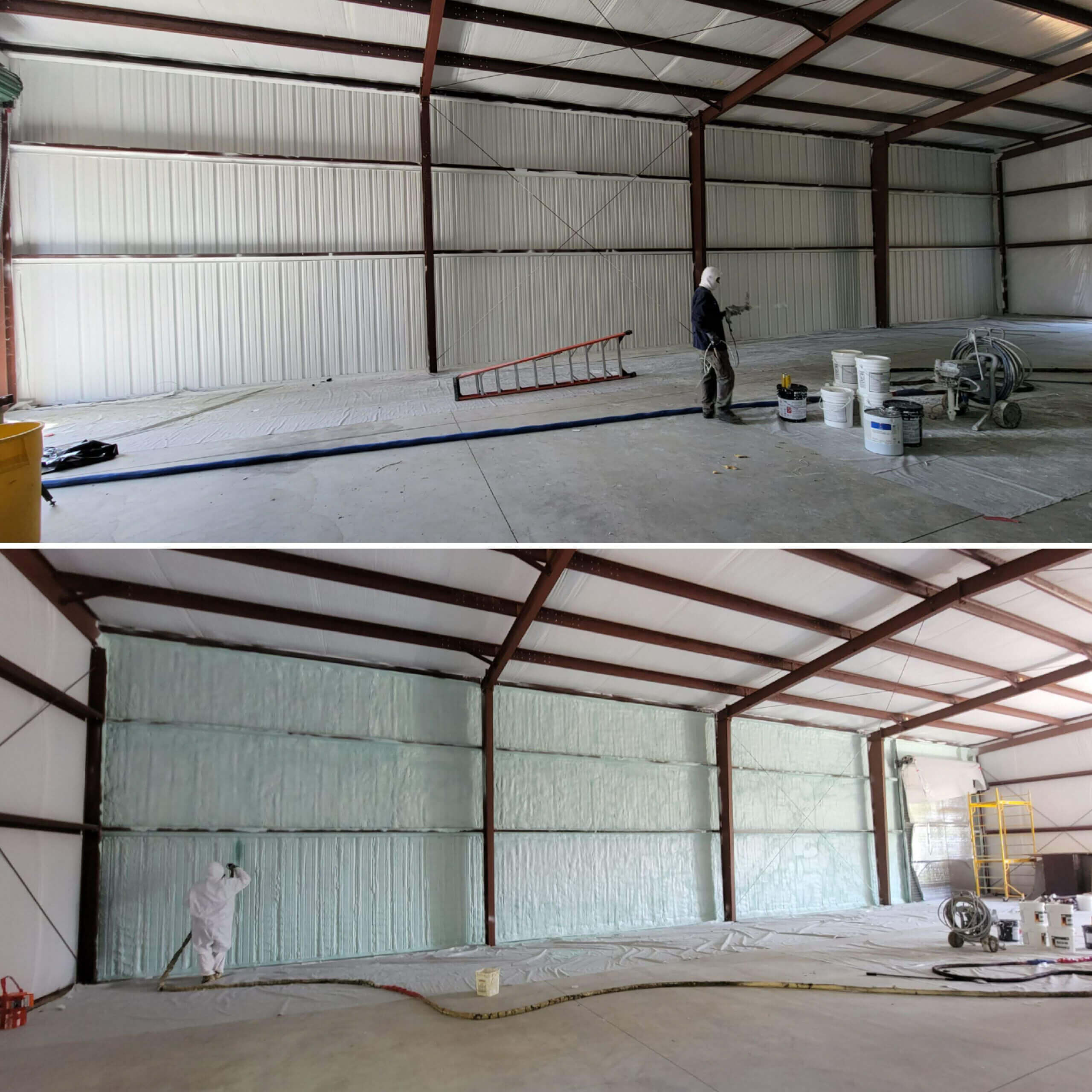
Spray foam and blown-in cellulose remain two of the most widely used insulation systems in California. But in 2025, with new energy regulations, the statewide HFC phase-out, and rapid changes in moisture-control requirements, the difference between these materials has become far more pronounced – especially in coastal areas like San Francisco.
While both materials can help meet energy goals, spray foam has evolved into a high-performance system capable of delivering airtightness, durability, and moisture protection in ways cellulose simply cannot replicate. At the same time, cellulose maintains its place as a cost-effective, eco-friendly option for large attic spaces and interior walls.
Whether you’re upgrading insulation in an older home in Daly City, retrofitting a Sunset District Victorian, or insulating a new ADU, understanding how these two materials differ will help you make a smart, future-proof investment that aligns with the 2025 Title 24 requirements.
Key Takeaways
-
Spray foam delivers superior performance thanks to higher R-values per inch, airtightness, and exceptional moisture control – especially important in fog-heavy coastal California.
-
Cellulose is cost-effective and eco-friendly, performing well in large attics and interior walls, but it requires supplemental air sealing to meet 2025 energy codes.
-
Energy savings: Spray foam typically reduces heating and cooling costs by 25–40%, while cellulose averages 10–20% depending on climate.
-
Moisture resistance is stronger with spray foam, particularly closed-cell, which prevents condensation and mold – a major advantage for homes in San Francisco, Daly City, and Pacifica.
-
Environmental progress: Cellulose is made from 80–85% recycled paper, while modern spray foams use low-GWP HFO blowing agents that cut emissions up to 99%.
-
Title 24 compliance is easier with spray foam because it naturally seals air leaks, while cellulose assemblies need membranes, caulking, and detailed installation.
What Is Insulation & Why It Matters in 2025
Modern insulation is no longer judged solely by R-value. California’s updated Title 24 standards place heavy emphasis on controlling air leakage, managing moisture, and ensuring consistent year-round energy performance.
Spray foam meets these demands naturally: it insulates, seals, and controls vapor movement in one seamless application. Cellulose insulates well but does not seal air – meaning its performance depends heavily on secondary membranes and perfect installation.
Why This Matters More in 2025
Tighter energy codes: The new 2025 requirements demand a much tighter building envelope. Spray foam’s airtight seal helps projects pass blower-door tests reliably, while cellulose requires additional layers of air barriers and meticulous detailing.
Moisture behavior in coastal climates: San Francisco’s foggy conditions cause moisture to infiltrate wall cavities daily. Closed-cell spray foam stops vapor diffusion and prevents condensation. Cellulose needs strict moisture management to avoid settling, clumping, or losing thermal performance.
Environmental progress: Cellulose remains a sustainability leader via recycled content. Meanwhile, modern HFO-based spray foams are among the lowest-GWP insulation materials available in 2025 – and greatly reduce HVAC loads over the building’s lifetime.
Spray Foam Insulation – Properties & Best Uses
Spray polyurethane foam (SPF) expands on contact, filling gaps and forming an airtight, high-density thermal envelope. This combination of insulation and air sealing is what sets spray foam apart from blown-in materials.
Technical Specifications
- Open-cell foam: R-3.5 to R-3.8 per inch; excellent sound absorption
- Closed-cell foam: R-6 to R-7 per inch; moisture barrier + structural rigidity
- Performance remains stable for 50–80+ years
- Ideal for Title 24 compliance because of natural air sealing
Where Spray Foam Excels
Spray foam consistently outperforms cellulose in areas where moisture, wind, or structural irregularities are present. Rooflines, exterior walls, rim joists, and crawl spaces – all challenging areas for cellulose – are where spray foam delivers its strongest value.
In coastal regions such as Pacifica, Half Moon Bay, or the Richmond District, spray foam protects against fog-induced condensation and prevents mold in wall and roof assemblies. In older California homes with uneven studs, spray foam expands to fit cavities perfectly, eliminating the voids that compromise cellulose performance.
Limitations
Spray foam does have a higher upfront cost and must be installed by professionally trained crews. Closed-cell foam may also require thermal or ignition barriers, depending on the building type.
Cellulose (Blown-In) – Properties & Best Uses
Cellulose insulation consists of shredded, treated recycled paper blown into cavities under pressure. It offers excellent coverage and a competitive R-value comparable to open-cell spray foam.
Technical Specifications
- R-3.2 to R-3.8 per inch
- Dense fill reduces sound transfer
- Eco-friendly material with high recycled content
- Performs well when dry and properly air-sealed
Where Cellulose Excels
Cellulose is an excellent choice for large attics, interior walls, and open cavities where coverage and cost efficiency matter. It provides good acoustic performance and is ideal for budget-conscious projects in mild or dry inland climates.
However, because cellulose is not an air barrier, it must be paired with membranes or caulking to meet energy code requirements – especially in coastal fog zones.
Limitations
Cellulose is sensitive to moisture, can settle over time, and may lose R-value if exposed to humid air or wind infiltration. Its performance depends not only on the product, but also on the completeness of air-sealing measures.
-1-2.jpg)
Professional spray foam installation ensures airtight performance and long-term durability.
Spray Foam vs Cellulose – R-Values & Thickness
| Property | Spray Foam | Blown-In Cellulose |
|---|---|---|
| R-value per inch | R-3.5–R-7 | R-3.2–R-3.8 |
| Air sealing | Excellent | None |
| Moisture control | Excellent (closed-cell) | Moderate |
| Sound control | High (open-cell) | High |
| Structural strength | Yes (closed-cell) | No |
| Lifespan | 50–80+ years | 20–30 years |
Real-World Example – R-38 in a California Attic
- Closed-cell spray foam → 5.5–6.5 inches
- Open-cell spray foam → 10–11 inches
- Cellulose → 10–12 inches, plus required air barrier
Spray foam reaches R-values in limited spaces where cellulose cannot – a major advantage in tight attics and older California homes.
When to Use Spray Foam vs Cellulose
Choose Spray Foam If:
- You live in a fog-heavy or humid coastal zone
- Blower-door performance matters
- You need airtight construction
- You’re insulating roofs, crawl spaces, rim joists, or exterior walls
- You want long-term durability and moisture protection
Choose Cellulose If:
- You’re insulating a large attic on a budget
- You prioritize recycled materials
- You want good sound absorption between rooms
- You’re in a mild inland climate
California-Specific Climate Recommendations
| Region | Climate Challenge | Recommended Insulation |
|---|---|---|
| Coastal (San Francisco, Daly City, Pacifica) | Daily fog cycles | Closed-cell foam strongly recommended |
| Inland Mild (San Jose, Dublin, Pleasanton) | Moderate conditions | Cellulose or hybrid systems |
| Central Valley | Extreme heat | Closed-cell foam for roof decks |
| Mountain & High Desert | Cold winters + limited cavities | Spray foam for highest R/inch |
2025 Building Codes & Sustainability Trends
The 2025 Title 24 update emphasizes airtightness and moisture management. Spray foam inherently satisfies these requirements, making it a straightforward path to compliance. Cellulose, while effective as insulation, requires extensive air-sealing detailing to achieve the same performance – especially in blower-door testing.
Sustainability trends show both materials improving. Cellulose continues to rely on recycled content and low embodied energy. Spray foam’s adoption of low-GWP HFO blowing agents makes it environmentally competitive while delivering far greater operational energy savings over the building’s lifespan.
USA Spray Me, based in San Francisco, designs Title-24-compliant spray foam systems that maximize energy efficiency and long-term durability in California’s challenging microclimates.