





Spray Foam vs Fiberglass Batts (2025): Costs, R-Values & Best Uses for California Homes
11/28/2025 3:00 PM
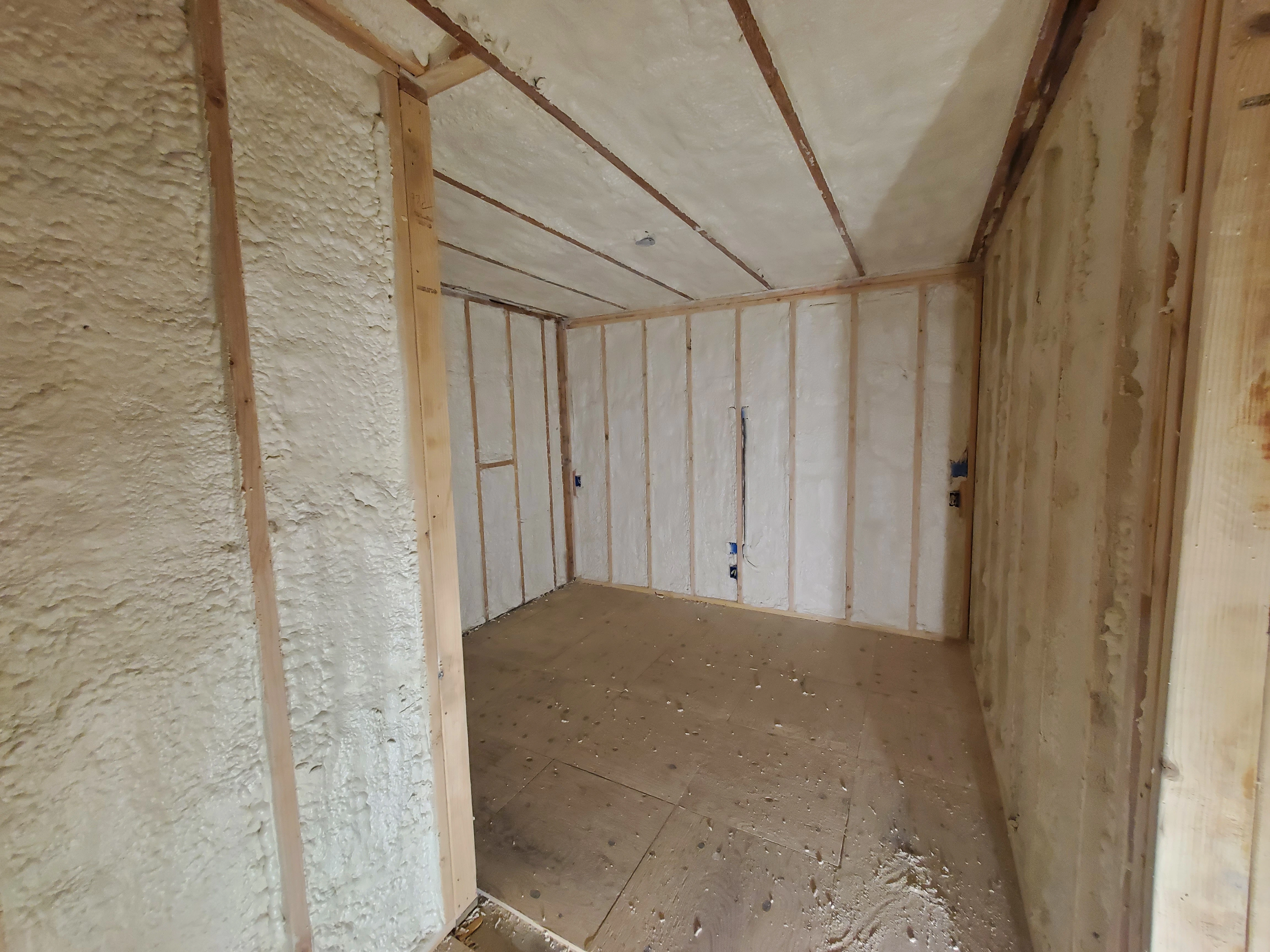
Spray foam vs fiberglass batts: making the right insulation choice for California homes in 2025.
Spray foam vs fiberglass is one of the most important insulation decisions California homeowners will make in 2025. With Bay Area energy prices rising, Title 24 tightening, and new low-GWP standards reshaping the insulation industry, the choice between spray foam and fiberglass batts now directly impacts your home's comfort, moisture protection, and long-term operational costs.
Whether you're insulating a newly built ADU in San Francisco, renovating a Victorian in the Sunset District, or retrofitting an older home in Daly City or Oakland, understanding the real differences between these materials will help you make a smart, code-compliant, future-proof investment.
This guide compares spray foam and fiberglass batts across performance specs, cost, durability, environmental impact, and ideal applications - with insights tailored to Northern California's unique climate.
Key Takeaways
Spray foam (open-cell & closed-cell) provides complete air sealing, higher R-values per inch, and superior moisture control - making it ideal for coastal, fog-heavy, and high-humidity areas.
Fiberglass batts are significantly cheaper upfront but offer weaker air sealing, lower thermal resistance, and shorter lifespan.
2025 California code updates require tighter air leakage, which spray foam meets naturally - fiberglass requires extra materials like air barriers and taping to pass.
Energy savings: Spray foam can reduce heating/cooling costs by 25–40%, fiberglass typically 5–15% depending on installation quality.
Best use cases: Spray foam excels in roofs, exterior walls, crawl spaces, rim joists, and retrofits. Fiberglass is acceptable for interior walls, garages, and budget builds.
Northern California climate factor: Spray foam performs dramatically better in foggy, windy, and moisture-prone Bay Area locations.
Get Your Free Quote
Fill out the form below for instant pricing
What Changed in 2025 - And Why This Comparison Matters
1. Title 24 (2025 Revision)
The 2024 IECC update and the 2025 California Title 24 revision demand higher R-values and stricter air-leakage targets than ever before. Spray foam helps meet these requirements naturally, while fiberglass requires additional layers (air barriers, tapes, rigid foam) to pass inspections.
New code requirements mandate:
- Higher wall & roof R-values
- Much stricter air leakage thresholds
- Lower moisture permeability in exterior assemblies
- Mandatory energy modeling for many projects
2. Climate Shifts in California
Northern California has high humidity & fog (San Francisco, Pacifica, Half Moon Bay), salt-air exposure, rapid temperature swings, and wind-driven air infiltration. Fiberglass batts struggle in these conditions because they cannot stop air movement. Spray foam solves these issues at their source.
3. Environmental Regulations
With the phase-out of high-GWP HFCs, closed-cell spray foam in 2025 uses HFO blowing agents that reduce greenhouse gas emissions by up to 99%. Fiberglass manufacturers have likewise increased recycled glass content, improving sustainability without compromising cost.
Open-Cell & Closed-Cell Spray Foam - Properties & Best Uses
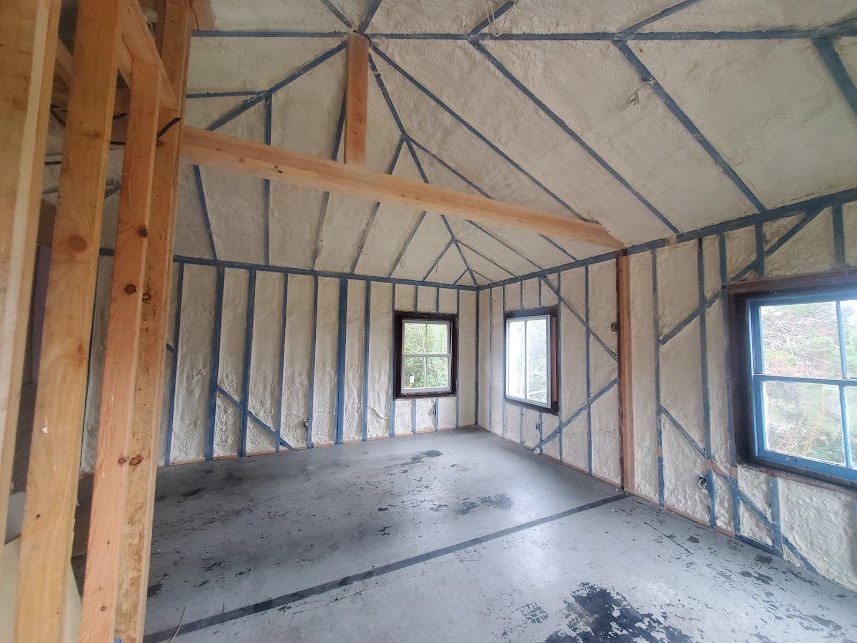
Spray polyurethane foam (SPF) is applied as a liquid that expands to fill cavities completely, providing both insulation and air sealing in a single step.
Technical Specifications
Open-cell foam delivers R-3.5 to R-3.8 per inch, expands significantly to fill irregular cavities, and offers outstanding sound absorption. Closed-cell foam delivers R-6 to R-7 per inch, forms a rigid moisture barrier, and adds structural strength - making it ideal for coastal and moisture-prone zones.
Both types outperform fiberglass in air sealing, durability, and long-term energy efficiency.
Where Spray Foam Excels
Spray foam shines in areas where air sealing is essential: attics, roofs, rim joists, crawl spaces, and exterior walls. In San Francisco's fog belt (Sunset, Richmond, Daly City, Pacifica), closed-cell foam prevents condensation, mold, and thermal bridging - problems fiberglass struggles to solve.
Retrofit projects benefit significantly from spray foam because it reaches high R-values in limited space and compensates for older framing irregularities.
Important Limitations
Spray foam comes at a higher upfront cost and must be installed by certified professionals. Closed-cell foam typically requires an ignition barrier and careful planning around ventilation requirements.
.jpg)
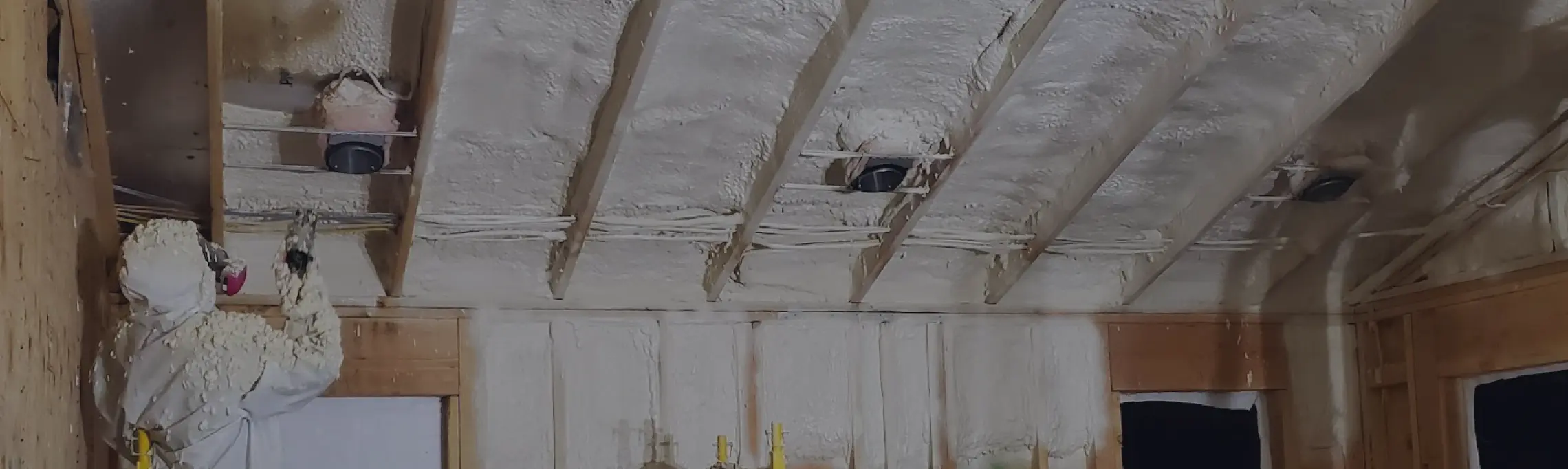
Professional spray foam installation ensures airtight performance and maximum energy efficiency.
Fiberglass Batts - Properties & Best Uses
Fiberglass batts are pre-cut panels made of spun recycled glass fibers. They remain the most widely used and budget-friendly insulation in the U.S.
Technical Specifications
Fiberglass delivers R-2.9 to R-3.8 per inch depending on density and thickness. It performs adequately in controlled conditions, but real-world results vary because fiberglass does not stop air movement. Any gaps, compression, or moisture exposure reduces its effective R-value.
Where Fiberglass Excels
Fiberglass is suitable for interior partition walls, garages, unfinished basements, and areas where air sealing is not critical. It's also useful in large new-construction projects where cost efficiency outweighs top-tier performance.
Important Limitations
Fiberglass underperforms in humid or windy environments, settles over time, and is prone to moisture absorption. Homes in coastal California often see fiberglass degrade faster due to fog intrusion and wind pressure.
Spray Foam vs Fiberglass - R-Values & Thickness
| Property | Spray Foam | Fiberglass Batts |
|---|---|---|
| R-Value per inch | R-3.5–R-7 | R-2.9–R-3.8 |
| Air Sealing | Excellent | Poor |
| Moisture Control | Excellent (closed-cell) | Very limited |
| Sound Control | Superior (open-cell) | Moderate |
| Structural Strength | Strong (closed-cell) | None |
| Lifespan | 50–80+ years | 10–25 years |
| Typical Uses | Exterior envelope | Interior walls, budget installs |
Real-World Example
To reach R-38 in a San Francisco attic:
- Open-cell foam requires 10–11 inches
- Closed-cell foam requires 5.5–6.5 inches
- Fiberglass requires 12–14 inches plus an air barrier to meet 2025 code
When to Use Spray Foam vs Fiberglass
Choose Spray Foam If:
You need maximum energy efficiency, moisture protection, high R-value in limited space, or long-term durability. It's especially effective in foggy coastal regions like San Francisco, Half Moon Bay, and Pacifica.
Choose Fiberglass If:
You're insulating interior walls, working with a tight budget, or building in mild inland climates where moisture and air leakage are minimal concerns.
San Francisco Specific Climate Recommendations
| Region | Climate Challenge | Recommended Insulation |
|---|---|---|
| Coastal (San Francisco, Daly City, Pacifica) | Fog, humidity, and wind | Spray foam performs best |
| Central Valley (Sacramento, Fresno) | Extreme heat | Closed-cell foam for roofs/walls |
| Mountain & High Desert | Cold winters and limited wall depth | Closed-cell foam for max R-value |
| Inland Mild Zones | Moderate conditions | Hybrid: closed-cell outside, fiberglass inside |
2025 Building Codes & Sustainability Trends
California's Title 24 now prioritizes airtightness and moisture management. Spray foam simplifies compliance because it acts as insulation, air barrier, and moisture control layer. Fiberglass requires additional steps to pass energy modeling and blower-door testing.
The U.S. transition to low-GWP materials makes spray foam far more environmentally responsible than older generations. Combined with reduced HVAC usage and improved thermal stability, homes insulated with foam show significantly lower lifetime carbon impact.
USA Spray Me, based in San Francisco, specializes in Title-24-compliant spray foam systems tailored to the unique demands of Northern California's climate.
Get Expert Spray Foam Guidance →Frequently Asked Questions (FAQ)
Here you'll find answers to the questions we get asked by our clients.
Open-cell spray foam provides R-3.5 to R-3.8 per inch, while closed-cell delivers R-6 to R-7 per inch, making it one of the highest-performing insulation materials available. These values allow spray foam to meet modern energy codes with less required thickness.
Fiberglass batts perform poorly in humid or fog-heavy regions like coastal California. Because fiberglass does not stop air movement, moisture-laden air can travel through the batts, condense on cold surfaces, and reduce the insulation's effective R-value.
Yes. Hybrid insulation systems are common in 2025. A typical hybrid approach uses closed-cell spray foam on the exterior envelope (roof, rim joists, exterior walls) for air sealing and moisture control, while fiberglass batts are used for interior walls or non-critical partitions.
Closed-cell spray foam adds measurable structural rigidity to walls, roofs, and floors. Once cured, it bonds to wood, metal, and sheathing, increasing racking strength and resistance to lateral movement. This is particularly valuable in seismic regions like the Bay Area.
Fiberglass alone rarely meets Title 24 air-leakage and moisture-management requirements in 2025. To comply, fiberglass assemblies typically require additional air barriers, taped seams, caulking, and sometimes rigid foam boards. Spray foam simplifies compliance because it functions as both insulation and an air barrier.
Contact us to discuss your insulation project.

 (855) 566-5340
Related Articles
.jpg)

© 2005-2025 All rights reserved. |
800 Avenue H, San Francisco, CA 94130 | (855) 566-5340
