
 10/21/2024
Key Takeaways
-
Spray foam insulation provides long-term energy savings, making it a smart investment for custom homes in Oakland.
-
Two main types of spray foam insulation are available: open-cell and closed-cell, each with its own benefits and costs.
-
Professional installation ensures optimal performance, but DIY options are available for those looking to save on labor costs.
-
Spray foam insulation excels in energy efficiency, air sealing, and longevity compared to traditional insulation types.
-
USA Spray Me specializes in providing expert installation of spray foam insulation for custom homes in Oakland, offering both open-cell and closed-cell options.
Spray foam insulation is a popular choice for custom homes in Oakland due to its superior energy efficiency and ability to seal air leaks. In this article, we break down the costs, types, pros, and cons of spray foam insulation to help you make an informed decision for your home.
Cost Factors
- Initial Investment The cost of spray foam insulation varies based on factors such as home size, type of spray foam used, and choice between professional installation or DIY. Expect to pay $1.50 to $3.00 per square foot for open-cell foam and $1.75 to $4.00 per square foot for closed-cell foam.
- Long-term Savings Though the upfront cost is higher than other insulation types, spray foam insulation reduces energy loss by creating an airtight seal—resulting in lower heating and cooling bills. These savings often offset the initial investment within a few years.
- Professional vs. DIY Professional installation ensures correct application but costs more. DIY kits can save on labor, but improper application risks gaps and uneven coverage.
USA Spray Me is an insulation company based in San Francisco and serving Northern California. Our expert technicians specialize in the application of high-quality foam polyurethane insulation, known for its superior thermal performance and air-sealing properties.
Spray Foam Types and Their Characteristics
Open-cell Foam
- Less dense and expands more than closed-cell, making it ideal for filling large spaces and hard-to-reach areas
- More affordable: $1.50 to $3.00 per square foot
- Not as effective in moisture resistance—less suitable for damp areas
Closed-cell Foam
- Denser with a higher R-value, providing better insulation performance
- Acts as a moisture barrier—ideal for areas exposed to humidity
- Higher cost: $1.75 to $4.00 per square foot, but benefits often outweigh the expense
Comparison of Types
| Feature | Open-cell Foam | Closed-cell Foam |
|---|---|---|
| Density | Low | High |
| Expansion | High | Low |
| Cost | $1.50 – $3.00 per sq. ft. | $1.75 – $4.00 per sq. ft. |
| Moisture Resistance | Low | High |
| R-value | 3.5 – 4 per inch | 6 – 7 per inch |
Pros and Cons of Spray Foam Insulation
| Pros | Cons |
|---|---|
| Energy Efficiency | Higher Initial Cost |
|
|
| Air Sealing | Installation Requires Expertise |
|
|
| Longevity | Initial Cost vs. Long-Term Savings |
|
|
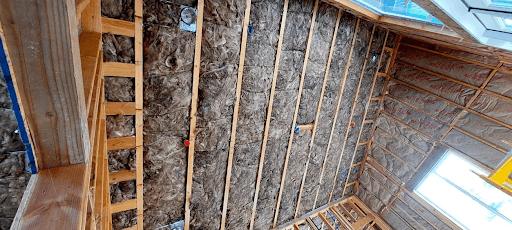
Efficient spray foam insulation in an Oakland custom home provides excellent thermal resistance and reduces energy costs.
Installation Process
Preparation
- Clean the area thoroughly
- Remove existing insulation
- Seal gaps and cracks to prevent air leaks
- Ensure the space is dry and free of debris
Application
- Spray the foam mixture onto the surface to be insulated. The mixture expands and hardens upon contact, creating an airtight seal
- Apply the foam evenly—avoid over-spraying to prevent waste and uneven coverage
Post-installation Maintenance
- Conduct a thorough inspection to ensure no gaps or missed areas. Regular maintenance checks help identify issues early
- Monitor changes in energy efficiency or indoor air quality, as these can indicate potential problems with the insulation
Comparison With Other Insulation
Fiberglass
- Common, relatively inexpensive, and easy to install
- Provides decent thermal performance
- Lacks the air sealing capability of spray foam—loses effectiveness if wet
Cellulose
- Made from recycled paper products, treated with fire retardants
- Eco-friendly with good thermal performance and soundproofing
- Lacks air sealing capability—prone to moisture issues
Mineral Wool
- Made from natural minerals, it provides excellent fire resistance and soundproofing
- More resistant to moisture than fiberglass or cellulose
- Can be more expensive—doesn’t provide the air sealing of spray foam
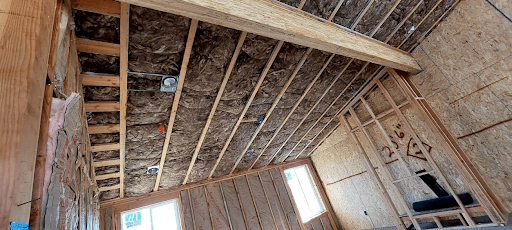
Spray foam insulation is an effective means to seal gaps and insulate a custom home’s interior.
Why Hire a Professional for Spray Foam Insulation?
While DIY kits may offer some savings, the risks are also considerable. Poor handling and application can lead to gaps, uneven coverage, and health risks from chemical handling. Professionals, on the other hand, ensure even application, creating an airtight seal that enhances energy efficiency and longevity.
In custom homes, professional installation is crucial to meet design and performance standards, maintaining comfort and minimizing long-term costs.
Why Choose USA Spray Me for Your Custom Home Spray Foam Insulation Project
At USA Spray Me , we are your trusted partner for custom home spray foam insulation projects in Oakland. With over 10 years of experience, our team brings extensive expertise in delivering insulation solutions designed for the unique requirements of custom homes.
We use high-quality foam polyurethane insulation, ensuring optimal performance and long-term durability. Our approach prioritizes customer satisfaction, working closely with you to match your specific needs and preferences, while offering competitive pricing.
From the initial consultation to installation, we provide thorough service to keep your custom home well-insulated, energy-efficient, and comfortable throughout the year.